Author: Erica Golding

  • Prepare for a Disaster using P-CEP

    It is no surprise to acknowledge and realise all the possible emergency disasters that can happen at any unpredictable time around the world. In these current times of the 21st century, being prepared for a disaster is a relevant discussion to have with the people close to yourself and in your community.

    What is P-CEP

    P-CEP is an acronym for Person Centred Emergency Planning.

    P-CEP is an awesome project to help people that identify living with a disability to prepare and get ready for possible disasters that can happen in their own region.

    It is a safe inclusive workshop that is facilitated and run by experienced Peer Leaders living with disabilities online and face to face around Australia.

    A wonderful workbook has been developed and printed as a hard copy for easy management of participating in the workshop P-CEP program. Person Centred Emergency Planning Workbook
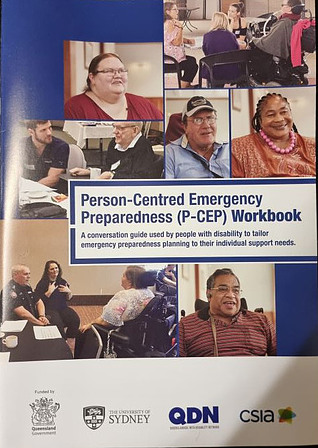
    The program is a development that has been funded by the Queensland Government via Queensland Disaster Resilience Fund (QDRF) and the Department of Communities, Disability Services and Seniors.

    P-CEP is organised with research led by Associate Professor Michelle Villeneuve from The Centre for Disability Research and Policy of the University of Sydney Australia.

    Michelle Villeneuve has a website for further info at Collaborating for Inclusion and you can contact her in regard to your interest in the research for P-CEP.

    Also, the Australian organisation CSIA Community Services Industry Alliance has involvement in the Person Centred Emergency Planning program.

    Queensland Disability Network is an incredible Queensland organisation based in the city Brisbane. QDN also has involvement in the running of the Person Centred Disaster Planning program.

    What is your understanding of preparing for risks?

    One of the first things that comes to my mind when thinking about Disasters, is when I reflect on some past disaster events that I have been in. It would be my thoughts of what it means about the possible risks in a region.

    I have grown up with very vigilant parents that were always giving some time to prepare for disasters.

    In particular, flooding in the city of Rockhampton Queensland Australia is a real threat in the summer storm season. This meant always looking out for that possible wild cyclone bringing sometimes winds of over 100 kilo meters per hour and torrential rain.

    My mother Eileen K. Bielenberg and my father Charles R. A. Bielenberg owned the 40-foot-old Fiesta boat in the 1980s which they renamed Atseif. The Fiesta was an old wooden boat that was the first boat to do tourist tours to Great Keppel Islands at the Capricorn Coast Yeppoon, during the late 1960s and 70s.Atseif 40 foot boat
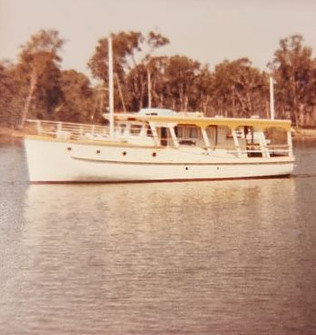
    My parents faced an ongoing battle to keep the boat safe, as it was moored in the mighty Fitzroy River. When it flooded it was very fast water tearing down its banks, often carrying tree logs in the running water.

    Charlie would go down to the raging waters of the Fitzroy and move the boat to the side of the river and tie to solid rooted trees.

    Charles would stay on the boat while the water was rising and often he saved other drifting boats that lifted off their anchors during the flooding.Charles Bielenberg in Fitzroy floods
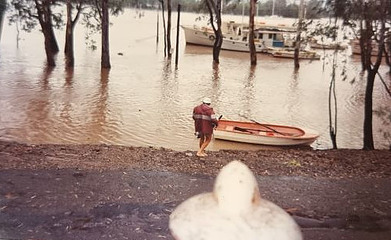
    Since those early childhood memories, I look at preparing for risks as an essential part of human life.

    And it did come apparent to me that so many people did not have this kind of preparation in place and as a result were left in some terrible situations.

    Have you asked yourself what is your level of understanding of what could be a possible risk in your area?

    I know this can be a confronting question and I do not take this subject lightly as it can trigger unwanted emotions and nervousness just thinking about this topic.

    However, it is a realistic question that is necessary to confront yourself with, for many reasons to serve as a warning for one!

    As I do believe that preparation is better, than the touch and go insecurity of complacency.

    Do you have local knowledge of local hazards?

    I would say the next question to ask yourself is “What are my local hazards?

    This can vary depending on your geographic location.

    Have your ever wondered or maybe you have already had an experience with being in a disaster where you live. Disasters can even effect someone living in the cities!

    A disaster can happen anywhere in the world and a variety of emergencies could affect your locality.

    Some possible events have been identified and listed in the Person Centred Emergency Planning workbook and are as follows:

    Heatwave, Severe Storm, Earthquake

    Flood, Tsunami, Landslide

    Bush fire, House Fire, Pandemic

    Cyclone, Power Outage

    I would highly recommend identifying your possible risks!

    Do some research with your local council, read some blogs about possible disasters and how to prepare for an emergency.

    With implementing a plan, you first need to know what your personal living situation is and where to find resources to help.

    The ongoing journey of planning.

    One very important issue that I recognise myself, is that planning is an ongoing process!.

    You can first give yourself credit for knowing what possibly could go wrong.

    Then the next question is really an ongoing process of uncovering your strengths and vulnerabilities of your needs, to take into consideration for a great disaster plan.

    Preparation for a disaster is not a one time fix everything solution!

    You may realise you need to attend to many decisions to put into action for your own individual personal plan.

    And the disaster plan will be absolutely totally different for everyone.

    This all depends on so many factors that are listed in the Person Centred Emergency Planning workbook via the Capability Wheel.

    The Capability Wheel is a design by Collaborating for Inclusion for acting and identifying your personal situation, supports and strengths that you need to consider for preparing and managing a disaster plan.

    I found when I did the P-CEP workshop online in 2022, I noticed that I was slightly prepared.

    However, there was heaps of things that I discovered through conversation with others, that I could see gaps in my plan.

    I also identified that this is truly a personal experience and an individual journey of planning which needs time to develop and grow.

    Where can your get support?

    I wish to express that even reading about this topic can cause undesirable stress and mixed feelings and I want to commend your for reading this far, thank you.

    It is possible to discuss preparing for disasters when you have moral support and your can reach out to someone close to your now. Make a point to talk about what your might like to share openly about your feelings on this topic of disasters.

    Even if your have no one close by, this might be the time to reach out to Lifeline Australia.

    People supportingI also acknowledge that you may be reading this article coming from an international region, then I would highly recommend that you reach out and share your feelings to an online group that you may be a participant of.

    Having a discussion is a critical part of preparing for disasters.

    It all starts with speaking about what you may feel uncomfortable about to someone that cares.

    This even could be a local business where your find yourself shopping to get your milk or bread.

    Making the first step.

    I would like to now invite you to the upcoming online P-CEP workshops which will be facilitated with experienced Peer Leaders online for Queensland, New South Wales, South Australia and Western Australia.

    Making the first step can be simply participating in one of these very well planned online workshops.

    The one-hour P-CEP workshops that are held on Zoom online, are very inclusive for people living with disabilities and all considerations have been explored in making these workshops safe and a friendly environment.

    Please send your expressions of interest to Queensland Disability Network for more information and reserving your spot for a fantastic eye-opening preparation for a disaster P-CEP workshop.

    These workshops are designed to create peer leaders in disaster management and by participating you can gain valuable experience for the future.

    Conclusion

    I have personally done this P-CEP workshop and at first I did find it confronting and certainly with some discussions it challenged my thoughts about how prepared I was for a disaster.

    I live with a psycho social disability and in the past I have been left in some very serious life threatening situations that I could have possibly prevented or at least changed the outcomes if I had been more prepared for disasters.

    You can come to a conclusion that this may be something that rings true to your heart and your own personal reasons to get prepared. And take actions towards making a choice to take part of the Person Centered Emergency Planning program.

    There are only benefits for preparing, and it could make a big difference when a disaster hits in your region.

    One thing I have learned, is that, it is not that a disaster won’t happen.

    It is more like, when and where will a disaster happen.

    Getting ready is one of the best choices I have made!

    And I welcome you to join us and share your openness to an ongoing preparation for planning for a disaster using P-CEP.

    I am here to help you with anything about this article or where to find further information, please do not hesitate to contact me at my email today.

    What are your plans now for the next moments after reading this?

    For me I am off to make a cup of nice milk tea and listen to some of my favourite music!

    Thanks for reading and when your want to share something please leave a comment below and I will be sure to reply!

    Kind regards
    Erica Golding
    Erica Golding

    Peer for Mental Health

  • Benefits of Quitting Marijuana

    Quitting marijuana can be among one of the most difficult addictions to overcome because there is so many false reasons that keep you hooked. Join me to discover the benefits and reasons to quit using marijuana once and for good.

    Tips for Quitting

    I have found that there is absolutely some positive and effective tips that can help get through those niggling cravings of using cannabis marijuana. Quitting marijuana does not have to be difficult when you consider all options to help you give up the marijuana addiction.

    Let me give you some tips for quitting cannabis use.

    Keen for a change then read on!
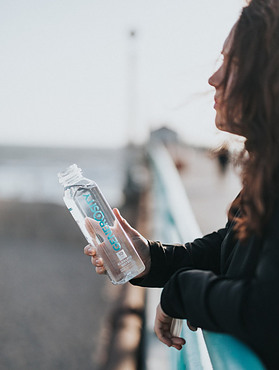
        1. First things first, start by drinking less coffee and tea and replace with clean water, preferably Spring Water. Look at drinking 5 to 6 bottles of 600 ml Spring Water each day.

        1. Use less of the words associated with using marijuana, like stoned, wasted, rips, bong, joint, blunt, chasing. Start being conscious of those trigger words that make your mind think about smoking or consuming marijuana. Choose other words in place for other positive actions and reasons to do something else other than the marijuana addiction.

        1. Find new clubs or associations that you can join that have a different user (people with other objectives) that you can meet new friends and associates that do not lead you in conversation to use marijuana. Find people with new interests and passions. This can be a range of places, such as walking groups, woodworking classes, university, craft groups, fishing groups, hiking groups, business entrepreneurship ventures, writing groups. You can get in touch with your local town council and see what other group activities that might interest you.

      Health Benefits

      There are so many health benefits in giving up the weed. The most obvious one is restoring the capacity of breathing and your lung function if you are smoking marijuana.

      The most dangerous side effects from smoking from a bong is the chances of getting water on the lungs, causing emphysema.

      There is also a decrease in chances of lung cancer, gum disease and losing teeth from decay.

      Having better mental health and avoiding emotional roller coasters is a big plus from not using cannabis. Being able to control moods and being more conscious of triggers that can upset you, instead of reacting too quickly with emotional out blasts.

      There is evidence that the mind altering substance of THC (Tetrahydrocannabinol) in marijuana changes the levels of chemicals in the brain and this can lead to mental illnesses such as schizophrenia, bipolar and chronic depression. It is really a dangerous scenario to put yourself in. There is also a high risk of suffering psychosis, which is a terrible state of confusion, deliberating delusion and paranoia.

      Letting go of the use of marijuana can decrease your chances of being diagnosed with these mental illnesses.

      Financial Benefits

      Money and assets can accumulate much more with prosperity in mind instead of always chasing the pot and spending whatever you have or selling whatever you can to buy the marijuana. The never ending cycle of losing thousands of dollars a month or worse still, stealing to try to pay for the addiction, can end.

      You can mature to a cycle of treating yourself to new cloths, plenty of good food and maintaining the rent or mortgage for your living lifestyle of a new abundance when you quit using marijuana.

      The financial rewards from quitting marijuana use, can be tracked in a quit weed app. In the app you put in your current habits cost and calculate the usage per day and the app will keep track of your spent money on the marijuana addiction. This tracking can show you statistics of exactly how much your addiction is costing you.

      Social Benefits

      Consuming marijuana often means sitting at home for weeks on end with little to no social interaction with others, usually because you are so consumed with being in your own world that mingling with others is the last thing on your mind

      However, interacting with others can be the most rewarding pleasure there is, sharing conversation, experiences and laughter.

      When you give up weed, it can open new doorways to meeting new people with aspirations that may excite you and get you totally wrapped in the power of connections.

      Quitting marijuana can evolve to the possibility of exploring new ventures!

      Setting Goals

      The biggest challenge can be to set a goal of quitting and starting a new life.

      It takes more than sometimes one decision, as you need to reinforce your reasons and see the rewards highlighted for the choice to end the cycle of marijuana consumption.

      You need to set firm goals for adjusting your new mindset and establishing new routines for new habits. It is to be aware that when quitting marijuana you need to create new habits that replace the addiction.

      Hence, the idea is to set mini goals at a step by step. Like removing all the marijuana paraphernalia and symbols of the drug from your living space. You can set these goals with a time frame and again it is reminding yourself the big picture of why you want a new life without the cruel addiction to pot.

      Setting goals can be easier when using an app on the phone or computer. You can search many types of setting goal apps in iTunes or play store, there really is a lot to choose from depending on your specific needs.

      Ways to Detox

      I would like to share some ways you can speed up the removal of THC (Tetrahydrocannabinol) and the stored marijuana in the body. Marijuana can stay in the body for up to a month, sometimes longer. And by eating certain good food and lots of water you can detox your body quicker.

      Lemon juice is a great detox, it will clean the blood and also help remove marijuana from the fat cells in the body. You can add slices of fresh lemon to your spring water and drink throughout the day.

      jug of water with lemons

      Cucumber is a great food for detoxing marijuana from the body. You can eat slices of fresh cucumber several times in the day. Or add it as a side salad to your meal, with fresh tomato.

      Vinegar is also known for detoxing and you can drink a tea spoon of it a day or alternately add it to the cucumber and side salad. Do not over consume vinegar as it is quite strong.

      There is a list of multi vitamins that also can be taken on a daily basis to help detox the stored THC (Tetrahydrocannabinol) and marijuana. Vitamin B and A C and D can help assist in detoxing the liver. Also, milk thistle.

      If you have allergies to certain foods or vitamins it is best to check with your general Doctor for further testing or advice. And if you are a female that is pregnant, be cautious and refer to your Doctor for instructions before starting a detox program.

      Also, if you are on prescribed pharmaceutical medication please consult your Doctor before changing food and taking multi vitamins.

      Alternatives to Pain Relief

      While it may seem a natural way by using marijuana to ease physical pain.  It can be a false sense of relief, for the factor of how using a drug  only masks the pain for short periods of time.
      The need to keep topping up on the drug to gain pain relief is not only expensive, it is futile for keeping pain in submission. 


      Just because marijuana is a plant does not make it a 100% safe or natural.  Marijuana is a chemical compound that alters the biology of the human body.  And often it can not be taken into some countries if you want to travel, even CBD oil can be restricted in certain countries

      I would like you to explore another way!  

      An alternative  innovative leading company that provides a completely 100% natural and new microtechnology in pain relief.

      You will be pleasantly surprised to read about this groundbreaking future in pain relief. 

      It is easy to use, fast acting and long lasting, also an affordable method of natural pain relief.

      By harnessing your bodies own electrical system, and by eliminating the use of medicines and drugs, you can enjoy a pain free life.

      The pain relief patches are waterproof, and are reusable using recycled materials.  They can last for several months.

      The new pain relief is registered with the FDA Food and Drug administration and has had successful clinical trials, where people are reporting relief of mild and chronic pain withing 10 minutes of applying to the body.

      Take a look for yourself here.

      I have some good news and there is definitely places where you can get support.

      There are the traditional ways such as ATODS (Alcohol, Tobacco and other Drugs) which is an Australian Government organization that you can register for professional ongoing support. By speaking to a support worker you can identify some powerful help and an ally for your goals to quitting using cannabis.

      Finding a peer with lived experience of quitting marijuana can be an excellent way to discuss openly your challenges. The power of the peer that is trained in open dialogue, which is an non biased, no shame, no power imbalance way of communicating.

      You are encouraged with talking to someone that is mutual and aligned with your goals and will help hold you accountable to your goals and actions.

      You can make a choice now to quit, just by taking the first step today

      In summary

      Quitting marijuana is a choice and it is redirecting your attitude to the addiction. Firstly you need to acknowledge that the use of marijuana is not a healthy choice. You need to shift your perspective of your consumption of marijuana and come to terms with real evidence of the addiction.

      Even with some countries making marijuana legal, this does not speak of the safety of marijuana consumption, all that is happening is that the governments want to profit from the already large consumption of marijuana.

      You need to again, realign your personal reasons of why and how you can benefit from quitting marijuana!

      Listening to other people that are pro marijuana is a no win battle, as they will deny the true harm that the consumption of marijuana is doing and it is best to avoid such conversations.

      Peer pressure of a negative nature can really alter and only give inner conflict to your goals. Often pot users are just looking for a user buddy or to profit from your addiction,

      By keeping adding reasons for the quitting process, this will build momentum to your resilience in saying no to marijuana!

      Remember this is an ongoing day to day change and it takes persistence in reinforcing your new life.

      There will be low periods of stamina and some brain fog, but taking time and consideration to remind yourself that you may have been consuming marijuana for a long time and takes the equivalent time to see the new direction impacting on your life.

      I am here as a peer to give my lived experience and other strategies that may help you along your journey in quitting marijuana, just ask me and I will reply!

      Wishing you all the best in conquering this and creating a new fresh start,

      Feel free to share your experiences here or email me for further communication.

      Kind regards

      Erica Golding

    1. When Feeling STUCK- Shift Something Physical

      It is common for people to have moments where their life feels STUCK not moving no FLOW. People forget that they are “Living Beings” Transforming people and with that said “We need to Move and move things” We need to move things Often!

      Do you remember being a young “Living Being” and your Mother or Grandmother told you and spoke ” Don’t just sit there biting your nails, go outside and play “MOVE” yourself!

      The worst thing a child can be told is to SIT DOWN! It destroys their creativity and natural flow.

      People have become complacent and scared about “change” since the dawn of time.

      But the whole concept of being a Moving Breathing Living Organism is that humans have cycles of Life!

      And for these cycles to be Shifted the Living Being needs to constantly have movement and flow in their life.

      Path in Forest

      Look at it this way!

      When you walk down the same path in a forest for a lifetime, each time it is different there.

      The forest does not have restrictions on the seasons unless the human has impacted it in some way and made it compliant.

      As the forest is starved of a River or lake or natural causeway of fresh water, the forest dies.

      Humans have become accustomed to not noticing change until a major disaster happens.

      I would now like to discuss the importance of moving back to the subject!

      My grandmother Iris Golding, would move things and reorganize the rooms in her house, my Auntie told me recently. I have done this also since I could move my furniture and things around the room as a juvenile.

      This gives relevance to a Spring Clean as the seniors would say to do.

      As harvesting can bring about many situations as mice plagues and other unwanted pests coming for the stored goods.

      As it is good for our bodies to be moving, we also need to move things around us in our environment, otherwise, stagnation can settle in.

      I will put a fan on in a room I am working in some time, to give the ambiance of gentle wind moving. A lot of households will put a water fountain feature in their living space or in the garden somewhere.

      Creating flow and positive chi.

      Water fountain

      The whole moon moves around the Earth every 27 days it completes a cycle of rotation. And of course, the Earth revolves around the Sun.

      Everything is moving it is a natural law.

      The same as the thoughts coming into our minds. Those 65 thousand thoughts a day are energetically moving through receptors in the brain.

      If we get stuck on one thought, it is a sign of stagnation. Or also known as a block in the aura field, this is the energy field around a human body.

      Moving or changing something or redesigning the space you live and work in can help move those thoughts and open gateways in the brain for a change.

      Okay! What if you live a minimalist life and you live with little to nothing around you? What do you do?

      I would suggest buying fresh flowers or growing a plant and again back to the water fountain for gentle stimulation.

      I also would highly recommend using sounds from musical instruments and bells and chimes. The sound coming from neutral producers, preferably not the sound of news reports or negative suggestive songs.

      Sounds like this electronic tune played by   DRMS

      Because Sound is moving also!

      Break the Silence as was an old saying.

      Sounds can break a train of thought too and shift the mood in the room in seconds.

      And then hence experience an Unstuck moment.

      Thanks for reading my take on how to get Unstuck.

      Let me know in the comments below what you think!

      Please consider subscribing to our Community Newsletter for more interesting and helpful messages and content.

      Wishing you all the best.

      Kind regards

      Erica Golding

      Erica Golding

    2. Supporting Peers – What can you do?

      Being able to listen

      It may seem an easy task to be able to listen. However, there can be complications around listening. You may feel inclined to answer or suggest solutions. This feels important and helpful, but in reality, it is not.

      The answer is to remain a listener. That is right just listen. Acknowledge the peer’s story!

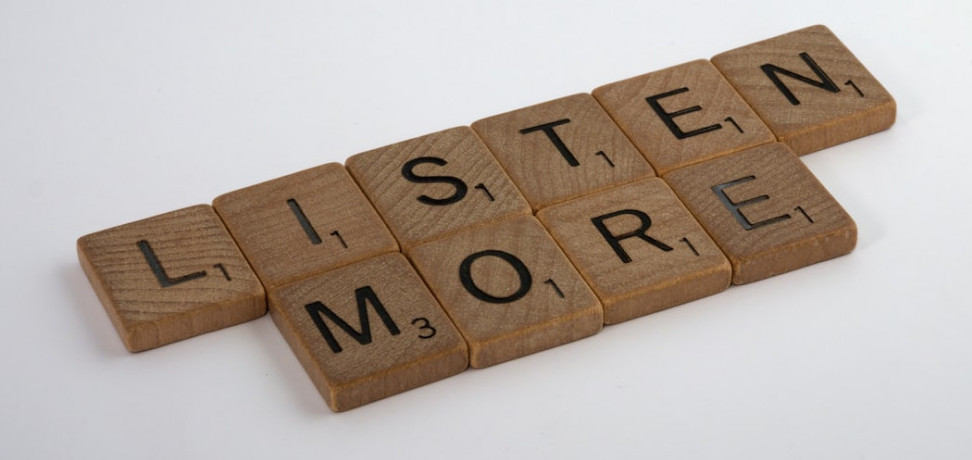
      Listen more

      Non-judgmental

      Ready to give an opinion? Does your perspective really help?

      Often a peer just wants to voice a story. An event in their life. They require someone open to being nonjudgmental, so the peer can speak without persecution. It remains a police person’s job to be judgmental, in which a court of law acts to judge a person.

      What is being spoken could be taken out of context easily, due to states of confusion.

      Acting as a peer that strives to help other people recover. The peer gives advice from their own lived successful recovery.

      The peer is simply informing the person in distress of self-determined steps they did to heal. Which opens trust to the mutual bond.

      First Aid in a Mental health crisis

      A person in a mental crisis. As deemed by many a spiritual emergency. In this state of being, the person needs to be protected in their environment. On approaching the situation, a peer can use a non-threatening voice and tone. And reassure that you are interested in helping the peer.

      First aid

      Relinquish Authority

      Often people’s first reaction is to take on an authoritative voice. A tone of telling someone what they think is right or normal behavior. This is dictating and a very coercive attitude. A peer of someone in distress trying to help needs to relinquish authority and strive to make a safe environment for the individual. Dialogue that is encouraging is more likely to de-escalate the event.

      Open the peer to the conversation. When a peer is given a mutual dialogue, they will usually be more inclined to listen for a shared experience.

      Safe Boundaries

      The reality is a peer requires safe boundaries established to ensure well-being while helping a peer. It is recommended to debrief with someone you trust. Share only the story or event to hear yourself objectively. How are you reacting when relaying the story? Are you responding to the peer with heightened stress or agitation?

      A peer can be open to challenging dialogue, and it is essential that it does not trigger your own past trauma or flashback of past distress. It is better to let the peer know, that their choice of words is not helping. Give the peer another suggested word they could use to express the situation, acknowledging their pain and frustration.

      Conclusion

      There is certainly some confusion about how exactly to react to someone in mental distress. During an emergency, the best practice is to remain calm and cool. Take a step back and breath!

      Think to yourself, if this was me in this situation. How would I want someone to help?

      Do what you can, while remaining safe.

      Use your empathy, and feel the peer’s perspective. Often when a person is in mental distress, they do not communicate clearly, so hence they need time to express themselves.

      I welcome you to discover more lived experience articles around mental health and person-centered recovery at peer for mental health.

      Many thanks and kind regards

      Erica Golding

      Erica Golding