It is no surprise to acknowledge and realise all the possible emergency disasters that can happen at any unpredictable time around the world. In these current times of the 21st century, being prepared for a disaster is a relevant discussion to have with the people close to yourself and in your community.
What is P-CEP
P-CEP is an acronym for Person Centred Emergency Planning.
P-CEP is an awesome project to help people that identify living with a disability to prepare and get ready for possible disasters that can happen in their own region.
It is a safe inclusive workshop that is facilitated and run by experienced Peer Leaders living with disabilities online and face to face around Australia.
A wonderful workbook has been developed and printed as a hard copy for easy management of participating in the workshop P-CEP program. 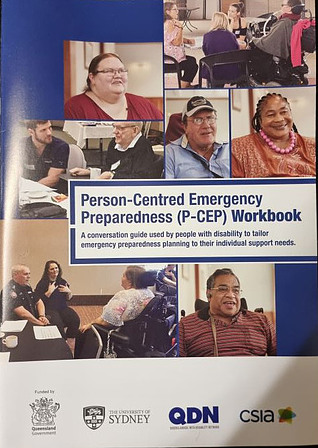
The program is a development that has been funded by the Queensland Government via Queensland Disaster Resilience Fund (QDRF) and the Department of Communities, Disability Services and Seniors.
P-CEP is organised with research led by Associate Professor Michelle Villeneuve from The Centre for Disability Research and Policy of the University of Sydney Australia.
Michelle Villeneuve has a website for further info at Collaborating for Inclusion and you can contact her in regard to your interest in the research for P-CEP.
Also, the Australian organisation CSIA Community Services Industry Alliance has involvement in the Person Centred Emergency Planning program.
Queensland Disability Network is an incredible Queensland organisation based in the city Brisbane. QDN also has involvement in the running of the Person Centred Disaster Planning program.
What is your understanding of preparing for risks?
One of the first things that comes to my mind when thinking about Disasters, is when I reflect on some past disaster events that I have been in. It would be my thoughts of what it means about the possible risks in a region.
I have grown up with very vigilant parents that were always giving some time to prepare for disasters.
In particular, flooding in the city of Rockhampton Queensland Australia is a real threat in the summer storm season. This meant always looking out for that possible wild cyclone bringing sometimes winds of over 100 kilo meters per hour and torrential rain.
My mother Eileen K. Bielenberg and my father Charles R. A. Bielenberg owned the 40-foot-old Fiesta boat in the 1980s which they renamed Atseif. The Fiesta was an old wooden boat that was the first boat to do tourist tours to Great Keppel Islands at the Capricorn Coast Yeppoon, during the late 1960s and 70s.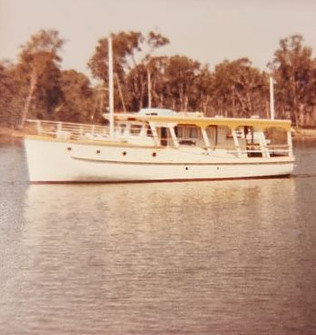
My parents faced an ongoing battle to keep the boat safe, as it was moored in the mighty Fitzroy River. When it flooded it was very fast water tearing down its banks, often carrying tree logs in the running water.
Charlie would go down to the raging waters of the Fitzroy and move the boat to the side of the river and tie to solid rooted trees.
Charles would stay on the boat while the water was rising and often he saved other drifting boats that lifted off their anchors during the flooding.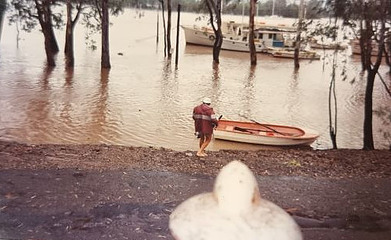
Since those early childhood memories, I look at preparing for risks as an essential part of human life.
And it did come apparent to me that so many people did not have this kind of preparation in place and as a result were left in some terrible situations.
Have you asked yourself what is your level of understanding of what could be a possible risk in your area?
I know this can be a confronting question and I do not take this subject lightly as it can trigger unwanted emotions and nervousness just thinking about this topic.
However, it is a realistic question that is necessary to confront yourself with, for many reasons to serve as a warning for one!
As I do believe that preparation is better, than the touch and go insecurity of complacency.
Do you have local knowledge of local hazards?
I would say the next question to ask yourself is “What are my local hazards?
This can vary depending on your geographic location.
Have your ever wondered or maybe you have already had an experience with being in a disaster where you live. Disasters can even effect someone living in the cities!
A disaster can happen anywhere in the world and a variety of emergencies could affect your locality.
Some possible events have been identified and listed in the Person Centred Emergency Planning workbook and are as follows:
Heatwave, Severe Storm, Earthquake
Flood, Tsunami, Landslide
Bush fire, House Fire, Pandemic
Cyclone, Power Outage
I would highly recommend identifying your possible risks!
Do some research with your local council, read some blogs about possible disasters and how to prepare for an emergency.
With implementing a plan, you first need to know what your personal living situation is and where to find resources to help.
The ongoing journey of planning.
One very important issue that I recognise myself, is that planning is an ongoing process!.
You can first give yourself credit for knowing what possibly could go wrong.
Then the next question is really an ongoing process of uncovering your strengths and vulnerabilities of your needs, to take into consideration for a great disaster plan.
Preparation for a disaster is not a one time fix everything solution!
You may realise you need to attend to many decisions to put into action for your own individual personal plan.
And the disaster plan will be absolutely totally different for everyone.
This all depends on so many factors that are listed in the Person Centred Emergency Planning workbook via the Capability Wheel.
The Capability Wheel is a design by Collaborating for Inclusion for acting and identifying your personal situation, supports and strengths that you need to consider for preparing and managing a disaster plan.
I found when I did the P-CEP workshop online in 2022, I noticed that I was slightly prepared.
However, there was heaps of things that I discovered through conversation with others, that I could see gaps in my plan.
I also identified that this is truly a personal experience and an individual journey of planning which needs time to develop and grow.
Where can your get support?
I wish to express that even reading about this topic can cause undesirable stress and mixed feelings and I want to commend your for reading this far, thank you.
It is possible to discuss preparing for disasters when you have moral support and your can reach out to someone close to your now. Make a point to talk about what your might like to share openly about your feelings on this topic of disasters.
Even if your have no one close by, this might be the time to reach out to Lifeline Australia.
 I also acknowledge that you may be reading this article coming from an international region, then I would highly recommend that you reach out and share your feelings to an online group that you may be a participant of.
Having a discussion is a critical part of preparing for disasters.
It all starts with speaking about what you may feel uncomfortable about to someone that cares.
This even could be a local business where your find yourself shopping to get your milk or bread.
Making the first step.
I would like to now invite you to the upcoming online P-CEP workshops which will be facilitated with experienced Peer Leaders online for Queensland, New South Wales, South Australia and Western Australia.
Making the first step can be simply participating in one of these very well planned online workshops.
The one-hour P-CEP workshops that are held on Zoom online, are very inclusive for people living with disabilities and all considerations have been explored in making these workshops safe and a friendly environment.
Please send your expressions of interest to Queensland Disability Network for more information and reserving your spot for a fantastic eye-opening preparation for a disaster P-CEP workshop.
These workshops are designed to create peer leaders in disaster management and by participating you can gain valuable experience for the future.
Conclusion
I have personally done this P-CEP workshop and at first I did find it confronting and certainly with some discussions it challenged my thoughts about how prepared I was for a disaster.
I live with a psycho social disability and in the past I have been left in some very serious life threatening situations that I could have possibly prevented or at least changed the outcomes if I had been more prepared for disasters.
You can come to a conclusion that this may be something that rings true to your heart and your own personal reasons to get prepared. And take actions towards making a choice to take part of the Person Centered Emergency Planning program.
There are only benefits for preparing, and it could make a big difference when a disaster hits in your region.
One thing I have learned, is that, it is not that a disaster won’t happen.
It is more like, when and where will a disaster happen.
Getting ready is one of the best choices I have made!
And I welcome you to join us and share your openness to an ongoing preparation for planning for a disaster using P-CEP.
I am here to help you with anything about this article or where to find further information, please do not hesitate to contact me at my email today.
What are your plans now for the next moments after reading this?
For me I am off to make a cup of nice milk tea and listen to some of my favourite music!
Thanks for reading and when your want to share something please leave a comment below and I will be sure to reply!
Kind regards
Erica Golding